
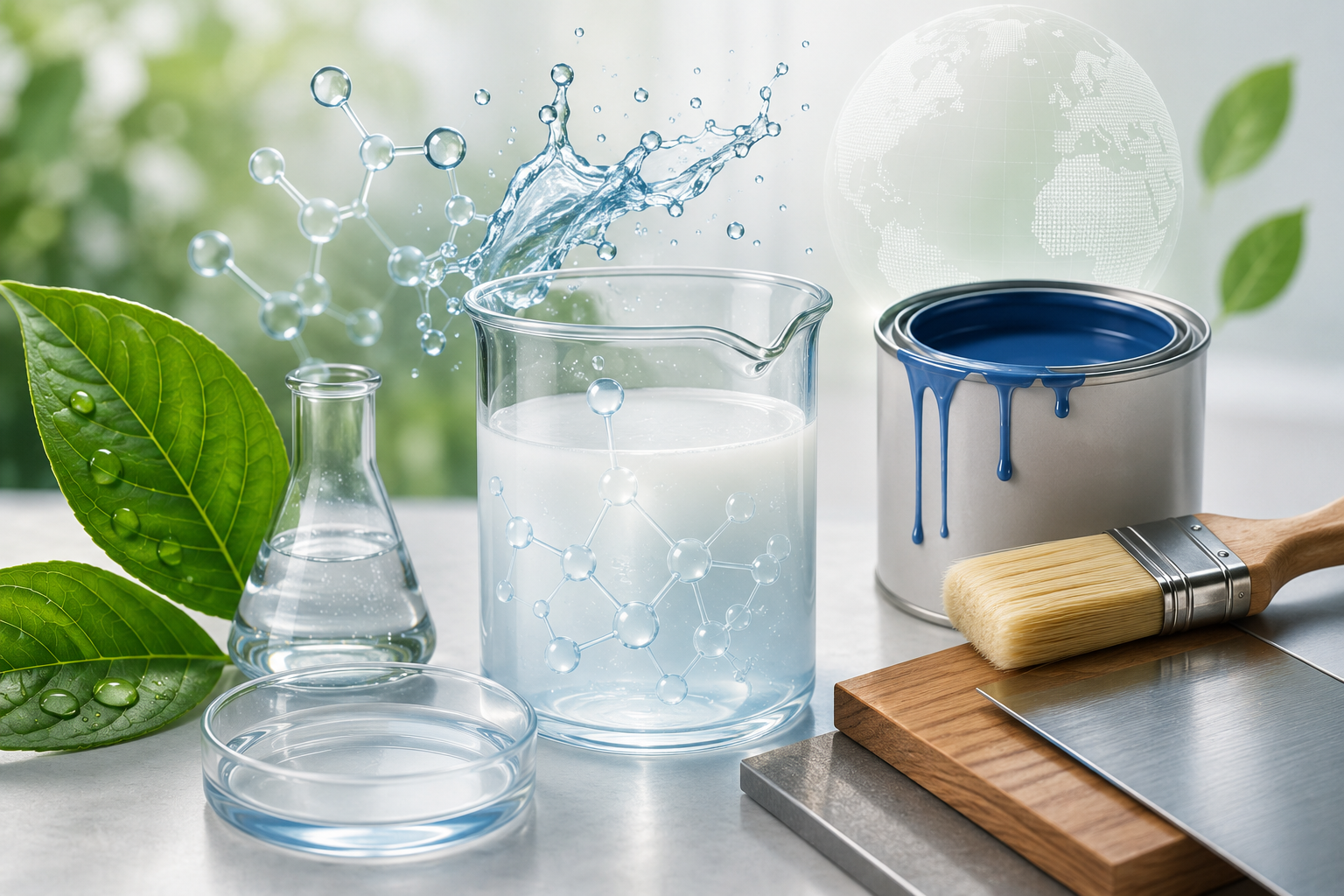
Su Bazlı Reçine Nedir? Avantajları Nelerdir?
Su bazlı reçine, kaplama ve boya sistemlerinde bağlayıcı (binder) görevi gören, taşıyıcı faz olarak su kullanılan reçine türüdür. Geleneksel solvent bazlı sistemlere kıyasla daha düşük uçucu organik bileşik (VOC) içeriğine sahip olması sayesinde çevre dostu çözümler sunar. Günümüzde çevresel düzenlemelerin artması ve sürdürülebilir üretim anlayışının yaygınlaşmasıyla birlikte su bazlı reçineler; boya, vernik, ahşap kaplama, metal kaplama ve endüstriyel koruyucu kaplama uygulamalarında önemli bir yer edinmiştir.
Su bazlı reçineler yalnızca çevresel avantajlarıyla değil, aynı zamanda yüksek performans, dayanıklılık ve kullanım kolaylığı gibi özellikleriyle de birçok sektörde tercih edilmektedir. Gelişen reçine teknolojileri sayesinde günümüzde su bazlı sistemler, solvent bazlı alternatiflerle rekabet edebilecek seviyeye ulaşmıştır.
Su Bazlı Reçineler Nasıl Çalışır?
Bir kaplama sisteminde reçine, pigment ve diğer katkı maddelerini bir arada tutarak yüzeye güçlü bir film oluşturur. Su bazlı reçinelerde taşıyıcı görevini organik solventler yerine su üstlenir.
Uygulama sonrasında su kontrollü şekilde buharlaşır ve reçine partikülleri birleşerek yüzey üzerinde dayanıklı, koruyucu ve estetik bir film tabakası oluşturur. Bu film; yüzeyi nem, UV ışınları, kimyasallar, çizilme ve dış etkenlere karşı korumaya yardımcı olur.
Bu yapı sayesinde hem uygulama kolaylaşır hem de daha düşük emisyon değerleri elde edilir.
Su Bazlı Reçinelerin Avantajları
Çevre Dostu Yapı
Su bazlı reçinelerin en önemli avantajlarından biri düşük VOC emisyonuna sahip olmalarıdır. Daha düşük uçucu organik bileşik salınımı sayesinde çevresel etkiler azalırken, sürdürülebilir üretim hedeflerine de katkı sağlanır.
Daha Güvenli Çalışma Ortamı
Organik solvent miktarının düşük olması sayesinde uygulama sırasında oluşan yoğun solvent kokusu önemli ölçüde azalır. Bu durum üretim tesislerinde çalışanlar için daha konforlu ve güvenli çalışma koşulları oluşturulmasına yardımcı olur.
Yüksek Performans
Modern su bazlı reçineler;
- Güçlü yapışma performansı
- Yüksek film dayanımı
- İyi mekanik direnç
- Kimyasal dayanım
- UV dayanımı
- Renk stabilitesi
gibi birçok teknik özelliği aynı anda sunabilmektedir.
Geniş Uygulama Alanı
Su bazlı reçineler farklı yüzey tiplerine uygun olarak formüle edilebilir.
Başlıca kullanım alanları şunlardır:
- İç ve dış cephe boyaları
- Ahşap kaplamalar
- Mobilya vernikleri
- Metal yüzey boyaları
- Endüstriyel koruyucu kaplamalar
- Dekoratif kaplamalar
- Yapı kimyasalları
Sürdürülebilir Üretime Katkı
Çevre bilincinin giderek önem kazandığı günümüzde birçok üretici karbon ayak izini azaltmayı hedeflemektedir. Su bazlı reçineler, daha düşük emisyon değerleri sayesinde sürdürülebilir üretim politikalarını destekleyen önemli hammaddeler arasında yer almaktadır.
Su Bazlı Reçine Türleri
Farklı uygulamalar için çeşitli su bazlı reçine teknolojileri geliştirilmiştir.
Water Reducible Alkyd Resins
Yüksek parlaklık, iyi yüzey yayılımı ve dayanıklılık gerektiren sistemlerde tercih edilir.
Acrylic Dispersions
Dış hava dayanımı, UV direnci ve renk kalıcılığı sayesinde dekoratif ve endüstriyel boya uygulamalarında yaygın olarak kullanılır.
Acrylic Modified Alkyd Resins
Alkid reçinelerin mekanik özellikleri ile akrilik sistemlerin dayanıklılığını bir araya getirerek dengeli performans sunar.
Polyester Resins
Kimyasal dayanım, sertlik ve mekanik mukavemet gerektiren özel kaplama sistemlerinde tercih edilmektedir.
Hangi Sektörlerde Kullanılır?
Su bazlı reçineler günümüzde pek çok farklı sektörde kullanılmaktadır.
Boya Sanayi
Dekoratif ve endüstriyel boya üretiminde temel bağlayıcı hammaddeler arasında yer alır.
Ahşap Endüstrisi
Mobilya, parke, MDF, kapı ve ahşap dekorasyon ürünlerinin korunmasında önemli rol oynar.
Metal Sanayi
Metal yüzeylerin korozyona karşı korunmasını sağlayan kaplama sistemlerinde kullanılmaktadır.
Yapı ve İnşaat
Cephe boyaları, iç mekan boyaları ve çeşitli yapı kimyasallarında yaygın olarak tercih edilir.
Endüstriyel Üretim
Makine ekipmanları, otomotiv yan sanayi, beyaz eşya ve çeşitli endüstriyel üretim alanlarında kullanılan kaplama sistemlerinin geliştirilmesinde önemli bir bileşendir.
Su Bazlı Reçine Seçerken Nelere Dikkat Edilmelidir?
Doğru reçine seçimi, elde edilecek kaplama performansını doğrudan etkiler.
Seçim yapılırken aşağıdaki kriterler değerlendirilmelidir:
- Uygulanacak yüzey tipi
- Beklenen mekanik dayanım
- Kimyasal direnç ihtiyacı
- UV dayanımı
- Parlaklık seviyesi
- Kuruma süresi
- Çevresel koşullar
- Nihai kullanım alanı
- Üretim prosesi ile uyumluluk
İhtiyaca uygun reçine seçimi, ürün performansını artırırken üretim verimliliğini de olumlu yönde etkiler.
Su Bazlı Reçinelerin Geleceği
Çevre dostu üretim anlayışının yaygınlaşması ve sürdürülebilir teknolojilere olan talebin artmasıyla birlikte su bazlı reçineler dünya genelinde daha fazla önem kazanmaktadır. Gelişen reçine teknolojileri sayesinde dayanıklılık, uygulama kolaylığı ve performans açısından her geçen gün daha gelişmiş çözümler sunulmaktadır.
Özellikle düşük VOC değerlerine sahip yüksek performanslı kaplama sistemleri, gelecekte boya ve kaplama sektörünün en önemli yapı taşlarından biri olmaya devam edecektir.