
Akrilik Dispersiyon Nedir? Özellikleri ve Kullanım Alanları
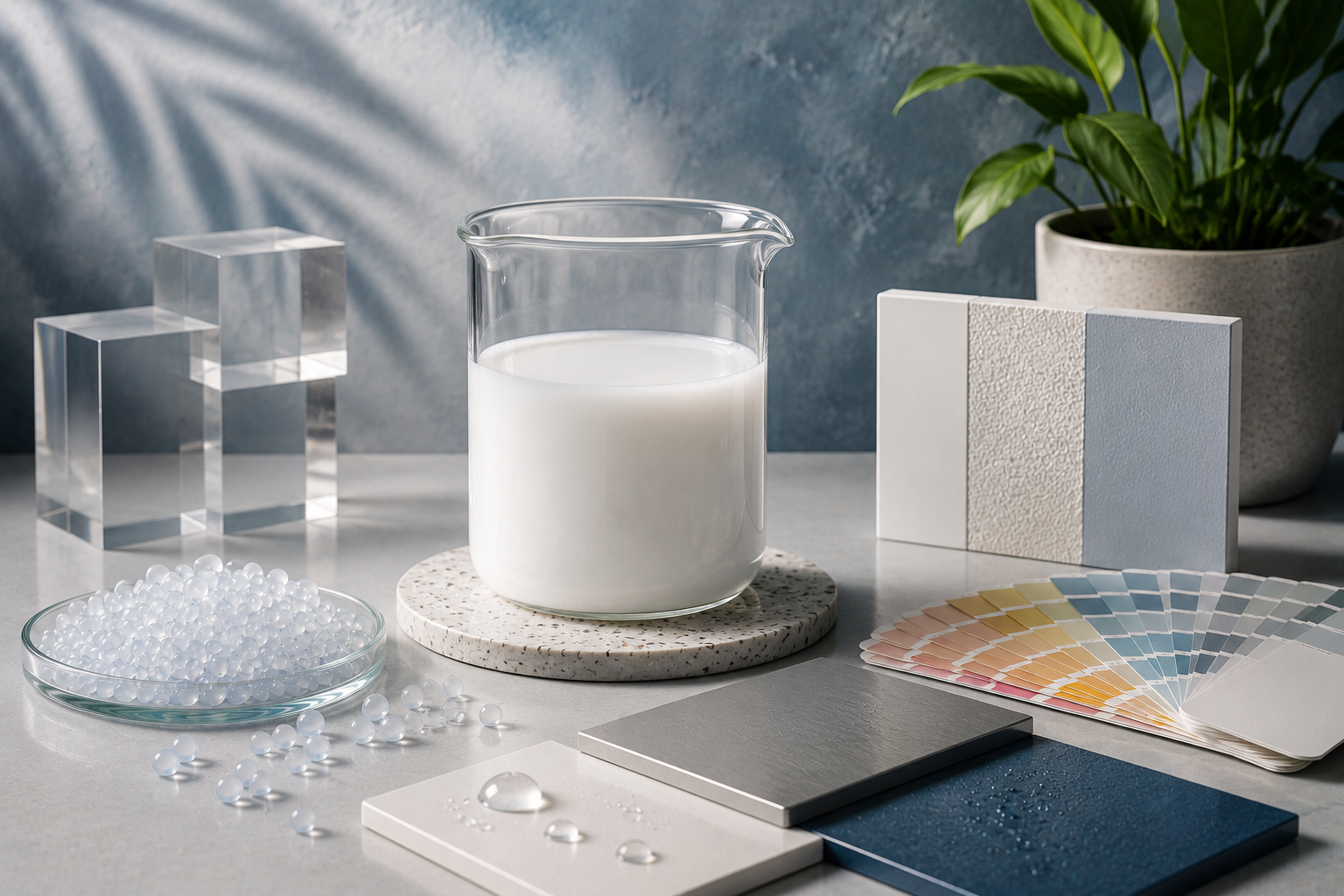
Akrilik dispersiyon, su bazlı boya ve kaplama sistemlerinde yaygın olarak kullanılan, polimer parçacıklarının su içerisinde homojen şekilde dağılmış olduğu bağlayıcı sistemdir. Yüksek dış ortam dayanımı, renk kalıcılığı, UV direnci ve uygulama performansı sayesinde dekoratif boyalardan endüstriyel kaplamalara kadar birçok alanda tercih edilmektedir.
Günümüzde çevre dostu üretim anlayışının yaygınlaşmasıyla birlikte akrilik dispersiyon teknolojileri, düşük VOC değerleri ve yüksek performans özellikleri sayesinde modern kaplama sistemlerinin vazgeçilmez bileşenlerinden biri haline gelmiştir.
Akrilik Dispersiyon Nasıl Çalışır?
Akrilik dispersiyonlarda polimer partikülleri su içerisinde dengeli şekilde bulunur. Uygulama sonrasında su kontrollü olarak buharlaşır ve polimer parçacıkları birleşerek yüzey üzerinde sürekli ve dayanıklı bir film oluşturur.
Bu film;
- Yüzeye güçlü yapışma sağlar,
- Dış etkenlere karşı koruma oluşturur,
- Renklerin uzun süre canlı kalmasına katkıda bulunur,
- Estetik ve homojen bir görünüm sunar.
Bu yapı sayesinde kaplama sistemi hem koruyucu hem de dekoratif özellik kazanır.
Akrilik Dispersiyonun Başlıca Özellikleri
Yüksek UV Dayanımı
Akrilik dispersiyonların en önemli avantajlarından biri güneş ışınlarına karşı yüksek direnç göstermeleridir. Bu özellik dış cephe uygulamalarında renk solmasını geciktirerek kaplamanın estetik görünümünü uzun süre korumasına yardımcı olur.
Mükemmel Renk Kalıcılığı
Akrilik esaslı bağlayıcı sistemler, pigmentlerin yüzeye güçlü şekilde tutunmasını sağlayarak renklerin uzun yıllar canlı kalmasına katkı sağlar.
Güçlü Yapışma
Ahşap, beton, sıva, metal ve birçok farklı yüzey üzerinde yüksek aderans sağlayabilen akrilik dispersiyonlar, uzun ömürlü kaplama sistemlerinin oluşturulmasına destek olur.
Esnek Film Yapısı
Oluşan film tabakası yüzey hareketlerine belirli ölçüde uyum sağlayabilir. Bu özellik özellikle dış cephe uygulamalarında çatlama riskinin azaltılmasına katkıda bulunur.
Düşük VOC Değeri
Su bazlı teknoloji sayesinde uçucu organik bileşik (VOC) miktarı düşüktür. Böylece hem çevresel etkiler azalır hem de daha güvenli çalışma koşulları sağlanır.
Akrilik Dispersiyon Nerelerde Kullanılır?
İç Cephe Boyaları
Pürüzsüz yüzey görünümü, kolay uygulanabilirliği ve uzun ömürlü performansı sayesinde iç mekân boyalarında yaygın olarak kullanılmaktadır.
Dış Cephe Boyaları
UV ışınları, yağmur ve sıcaklık değişimleri gibi dış ortam koşullarına karşı gösterdiği dayanım nedeniyle dış cephe sistemlerinde önemli bir bağlayıcıdır.
Ahşap Kaplama Sistemleri
Kapı, pencere, mobilya ve dekoratif ahşap ürünlerde koruyucu ve estetik kaplama oluşturulmasına katkı sağlar.
Endüstriyel Kaplamalar
Metal yüzeyler, makine ekipmanları ve çeşitli endüstriyel uygulamalar için geliştirilen su bazlı kaplama sistemlerinde kullanılmaktadır.
Yapı Kimyasalları
Akrilik dispersiyonlar, bazı yapı kimyasalları ve özel kaplama sistemlerinde performansı artıran bağlayıcı bileşen olarak değerlendirilmektedir.
Akrilik Dispersiyonun Avantajları
Akrilik dispersiyon teknolojisi birçok önemli avantaj sunmaktadır.
- Yüksek UV dayanımı
- Uzun ömürlü renk kalıcılığı
- Düşük VOC emisyonu
- Çevre dostu yapı
- Güçlü yüzey aderansı
- Esnek film yapısı
- Kolay uygulanabilirlik
- Homojen kaplama görünümü
- Yüksek hava koşullarına dayanım
- Geniş kullanım alanı
Akrilik Dispersiyon Seçerken Nelere Dikkat Edilmelidir?
Her uygulama farklı performans beklentilerine sahiptir. Bu nedenle reçine seçiminde aşağıdaki kriterlerin değerlendirilmesi önemlidir.
- İç veya dış ortam kullanımı
- UV dayanımı ihtiyacı
- Beklenen mekanik dayanım
- Su dayanımı
- Kimyasal direnç
- Parlaklık seviyesi
- Uygulanacak yüzey türü
- Kuruma süresi
- Üretim prosesi
Doğru akrilik dispersiyon seçimi, kaplama sisteminin performansını ve kullanım ömrünü doğrudan etkiler.
Akrilik Dispersiyon Teknolojilerinin Geleceği
Su bazlı kaplama teknolojilerinin gelişmesiyle birlikte akrilik dispersiyon sistemleri de sürekli olarak yenilenmektedir. Daha düşük VOC değerleri, gelişmiş dayanım özellikleri ve sürdürülebilir üretim anlayışı doğrultusunda geliştirilen yeni nesil akrilik reçineler, boya ve kaplama sektörünün geleceğinde önemli bir rol üstlenmektedir.
Çevre dostu ve yüksek performanslı çözümlere olan talebin artmasıyla birlikte akrilik dispersiyon teknolojilerinin kullanım alanlarının daha da genişlemesi beklenmektedir.