
What Is Acrylic Dispersion? Properties and Applications
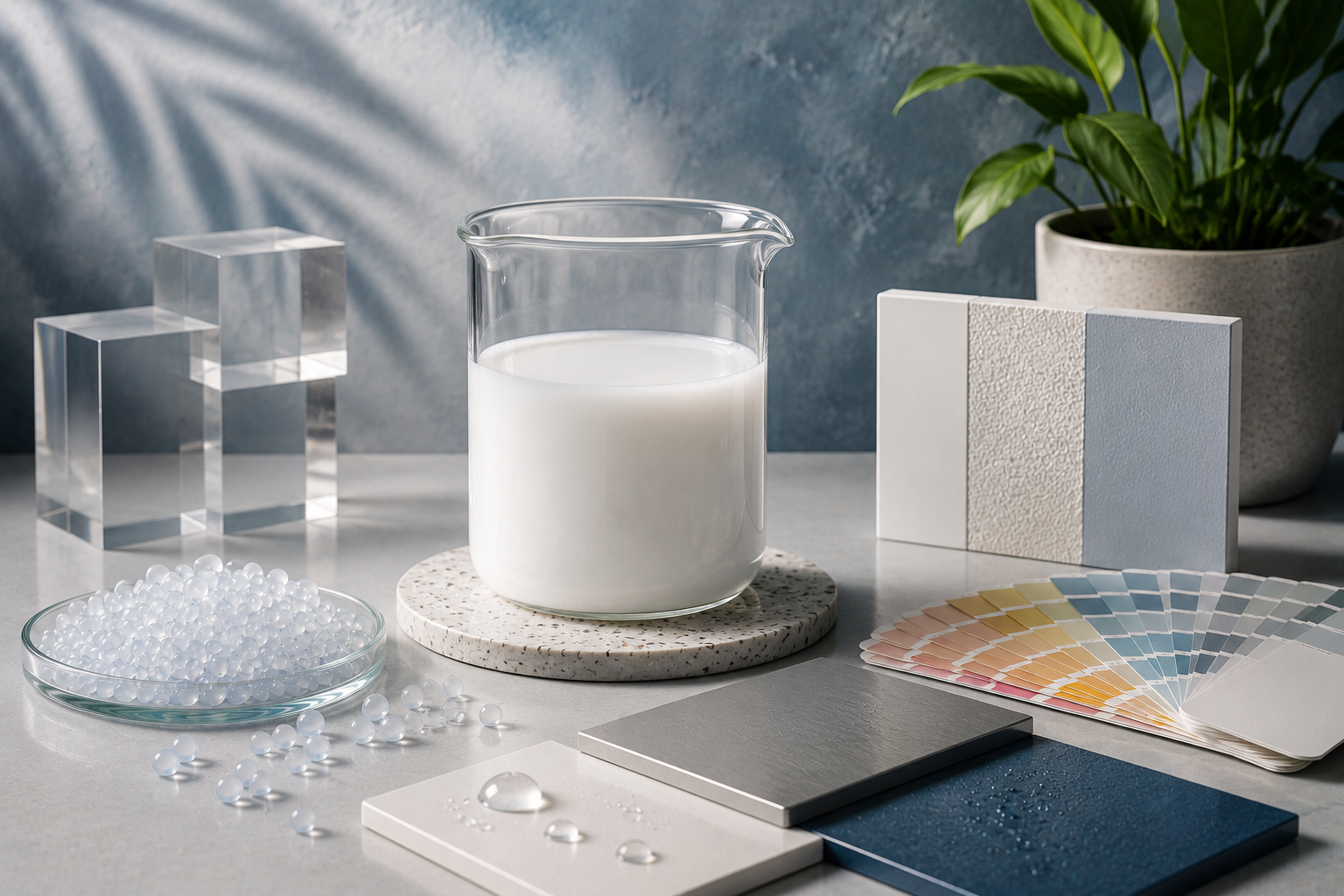
Acrylic dispersion is a water-based binder system in which polymer particles are uniformly dispersed in water. Widely used in water-based paint and coating systems, acrylic dispersions offer excellent weather resistance, color retention, UV stability, and application performance, making them suitable for a broad range of applications, from decorative paints to industrial coatings.
With the growing emphasis on environmentally responsible manufacturing, acrylic dispersion technologies have become an essential component of modern coating systems thanks to their low VOC emissions and outstanding performance characteristics.
How Does Acrylic Dispersion Work?
In acrylic dispersions, polymer particles remain uniformly suspended in water. After application, the water gradually evaporates, allowing the polymer particles to coalesce into a continuous and durable film on the surface.
This protective film:
- Provides excellent adhesion to the substrate
- Protects the surface against environmental influences
- Helps maintain vibrant color over time
- Creates a smooth and aesthetically pleasing finish
As a result, the coating system delivers both protective and decorative performance.
Key Properties of Acrylic Dispersions
Excellent UV Resistance
One of the greatest advantages of acrylic dispersions is their exceptional resistance to ultraviolet (UV) radiation. This helps minimize color fading and preserves the appearance of exterior coatings for extended periods.
Outstanding Color Retention
Acrylic binder systems securely anchor pigments to the substrate, ensuring long-lasting color vibrancy and improved aesthetic performance.
Strong Adhesion
Acrylic dispersions provide excellent adhesion to a wide variety of substrates, including wood, concrete, plaster, metal, and many other construction materials, supporting the development of durable coating systems.
Flexible Film Formation
The cured coating film is capable of accommodating a certain degree of substrate movement, reducing the risk of cracking, particularly in exterior applications.
Low VOC Content
Because acrylic dispersions are water-based, they contain low levels of volatile organic compounds (VOCs), reducing environmental impact while providing a safer working environment.
Applications of Acrylic Dispersions
Interior Paints
Acrylic dispersions are widely used in interior paints thanks to their smooth finish, ease of application, and long-lasting performance.
Exterior Paints
Their excellent resistance to UV radiation, rain, and temperature fluctuations makes acrylic dispersions an ideal binder for exterior architectural coatings.
Wood Coating Systems
They contribute to the protection and decorative appearance of doors, windows, furniture, and other wood products.
Industrial Coatings
Acrylic dispersions are commonly used in water-based coating systems developed for metal surfaces, machinery, equipment, and a variety of industrial applications.
Construction Chemicals
They also serve as high-performance binder components in construction chemicals and specialized coating formulations.
Advantages of Acrylic Dispersions
Acrylic dispersion technology offers numerous benefits, including:
- Excellent UV resistance
- Long-lasting color retention
- Low VOC emissions
- Environmentally friendly formulation
- Strong adhesion
- Flexible film formation
- Easy application
- Smooth and uniform coating appearance
- Outstanding weather resistance
- Wide range of applications
Key Considerations When Selecting an Acrylic Dispersion
Every application has unique performance requirements. Therefore, the following factors should be carefully evaluated when selecting an acrylic dispersion:
- Interior or exterior use
- Required UV resistance
- Expected mechanical performance
- Water resistance
- Chemical resistance
- Desired gloss level
- Type of substrate
- Drying time
- Manufacturing process compatibility
Selecting the appropriate acrylic dispersion has a direct impact on the performance, durability, and service life of the finished coating system.
The Future of Acrylic Dispersion Technologies
As water-based coating technologies continue to evolve, acrylic dispersion systems are becoming increasingly advanced. Next-generation acrylic resins are being developed with lower VOC emissions, enhanced durability, and improved sustainability to meet the growing demands of the modern coatings industry.
With increasing demand for environmentally friendly, high-performance coating solutions, the use of acrylic dispersion technologies is expected to expand even further across a wide range of industrial and decorative applications.